Membrane hiking boots
Transverse waterproof hiking boots and Newton Alpine PT membrane SKUs are checked against a 10,000 mm hydrostatic head target with taped seams. PU-coated uppers are excluded from this report class.
This page is the evidence map for ISO 9001:2015, amfori BSCI, OEKO-TEX STANDARD 100, SATRA footwear tests and destination-market files. Nature, carbon and ESG campaign language is not used here; the layout is a compliance roadmap for technical buyers.
Textile lots arrive with OEKO-TEX STANDARD 100 letters. Rubber cups arrive with compound codes. Membrane rolls arrive with hydrostatic head certificates. Lots without letters stay in quarantine.
ISO 9001:2015 records cover last code, stitch class, overlay weld map and outsole bond. Inline audits follow the producing site’s amfori BSCI file, not a generic factory brochure.
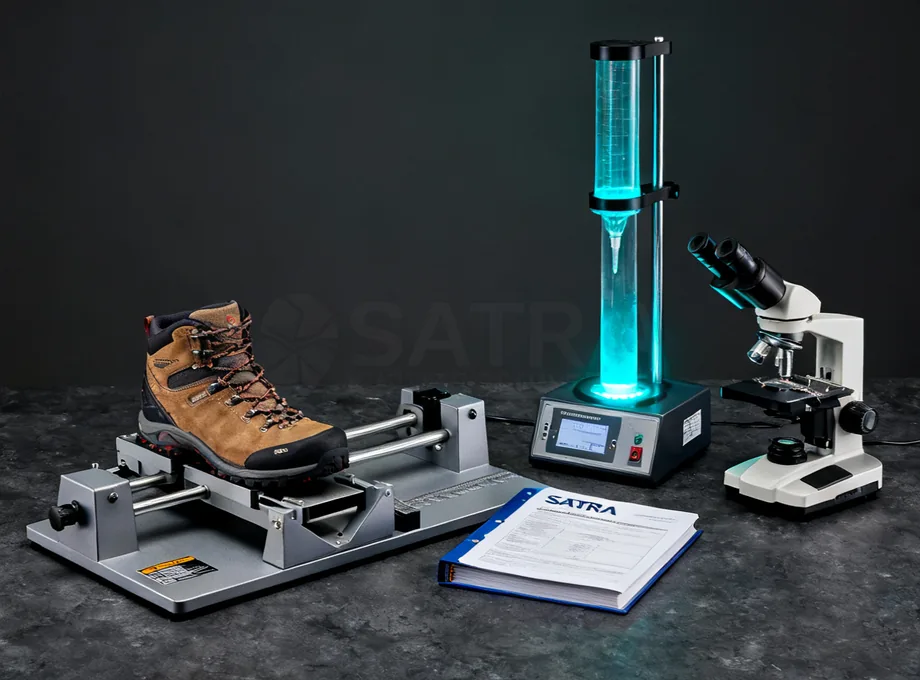
SATRA-style flex, bond and abrasion run on gold and production samples. Waterproof hiking boots add a 10,000 mm hydrostatic check. DWR-only SKUs are not given a membrane report.
US kids sizes add CPSIA tracking. EU textile SKUs keep OEKO-TEX scope. Work SKUs add ASTM F2413 only when a safety plate is actually specified. Carton marks match the locked construction sheet.
Numbers below are method windows, not advertising multipliers. A buyer who needs a different hydrostatic class or a safety-toe plate must say so in the brief; the lab will not invent a higher class after shipment.
Transverse waterproof hiking boots and Newton Alpine PT membrane SKUs are checked against a 10,000 mm hydrostatic head target with taped seams. PU-coated uppers are excluded from this report class.
Flex crack, outsole bond and lug abrasion sit in the retained-sample file. Hiking and work SKUs keep a higher abrasion gate than road foam packages sharing a similar silhouette.
The producing site keeps an ISO 9001:2015 record for last code, inspection sampling and nonconforming pair handling. The certificate number is issued with the dossier, not printed as decoration on the website.
amfori BSCI audit summaries are released under NDA for qualified wholesale and OEM accounts. The file names the producing site; it is not a group-wide slogan.
Columbia’s core catalog on this site is athletic and outdoor footwear. Sister outdoor programs sometimes sit in the same buyer brief. EN 15194 and UL 2849 are electrical/EPAC standards for e-mobility SKUs; they are attached only when an ebike or e-scooter item is actually on the order. EN ISO 12402 is a PFD/lifejacket buoyancy standard; fishing boots and water shoes are not flotation devices and do not inherit a newton buoyancy rating. Claiming those marks on a hiking boot is treated as a labeling error.
GORE-TEX versus PU coating remains the most frequent construction dispute. Membrane + taped seam is one waterproof class. PU coating is another. DWR spray on an engineered knit is water-resistant only. Columbia will print the class that was tested, not the class a catalog photo suggests.
Flex, bond and abrasion protocols used on hiking boots, trail shoes and PFG fishing boots. Reports name the method and the sample size, not a pass/fail slogan.
Textile lot letters for uppers, linings and laces. Scope is the article class on the letter, not every trim on the pair.
ISO 9001:2015 quality records and amfori BSCI social audits for the producing site named on the purchase order.
CPSIA tracking for US youth sizes, EN textile notes for EU, and ASTM F2413 only when a work plate is specified.
List the SKU family, destination market and which letters you need: ISO 9001, BSCI, OEKO-TEX, SATRA methods, CPSIA or ASTM F2413. Do not request EN 15194, UL 2849 or EN ISO 12402 unless the order actually includes e-mobility or PFD items.